
Start with what you want the space to do
Think about how you and your users will use the pergola every day. Do you need all-day sun control, rain protection, integrated power for lighting and AV, or solar generation? A clear brief saves time and cost. If you’re exploring energy-positive options, consider pairing the structure with a solar pergola so the roof both shades and generates power.
Decide load, span and placement first
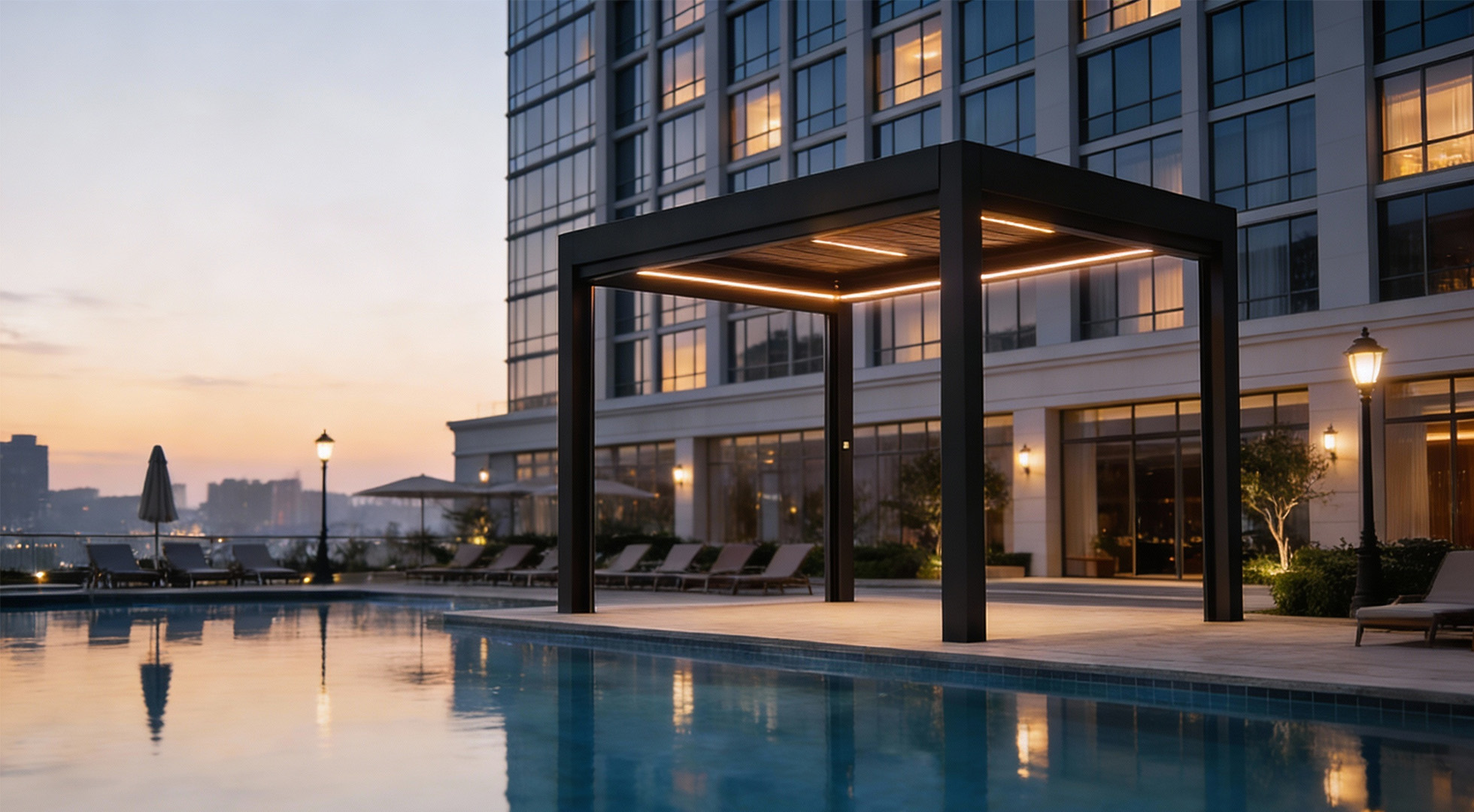
Set the structural constraints before you pick finishes. Specify expected clear spans, roof dead load, live load (people, snow where applicable) and wind exposure. Tell engineers the exact mounting surface—concrete slab, timber deck, or steel frame—so connections are detailed. Smaller mistakes here force expensive rework on site.
Choose louver type and operation to match use
Fix the louver profile and operation early. Narrow, aerodynamic blades shed rain better; wide blades give stronger shade. Motorized, remote or scene-controlled louvers work for hospitality and high-end residential projects; manual options suit budget installs. Specify blade travel, cycle rating, and a fail-safe position for power loss so the pergola behaves predictably.
Integrate lighting and electrical with real constraints in mind
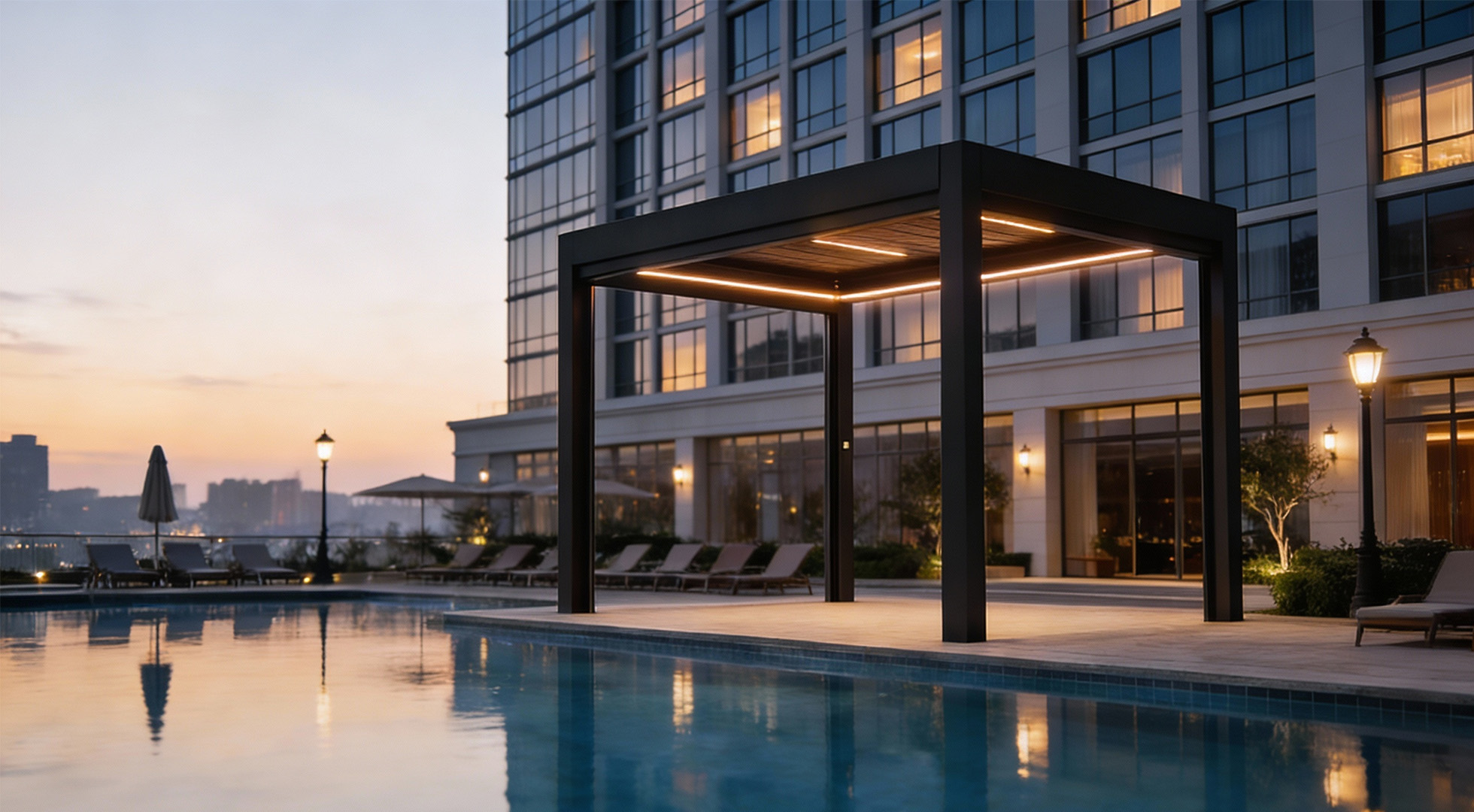
Lighting is more than ambience—it’s how the space gets used after dark. Pick LED modules with a minimum IP65 for outdoor exposure, low glare, CRI above 80, and color temperatures between 2700K–4000K depending on mood. For compliance and performance, note that specifiers in Southern California, where Title 24 energy rules and municipal outdoor lighting guidelines drive design choices, commonly choose outdoor pergola led lights to meet efficiency and glare standards. Plan conduit runs, junction box locations, and remote drivers at design stage so installers don’t chase power mid-build.
Controls, solar and backup—specify them together
Decide on control logic upfront: simple dimmer, timer, occupancy sensor, or smart scenes tied into a building management system. If you pair the pergola with PV, specify inverter placement, DC disconnects, and battery backup if you want lighting during outages. Match controls to the electrical schedule; don’t leave it to the electrician to guess which circuits should be on a generator or battery bank.
Materials, finishes and maintenance realities
Pick corrosion-resistant materials for coastal or high-humidity sites—powder-coated aluminum, stainless fasteners, and marine-grade seals. Specify surface finish warranties and a clear maintenance plan: how often to wash, check motor lubrication, and test water run-off. A durable finish that’s easy to maintain reduces lifecycle cost and keeps the pergola functioning as specified.
Common pitfalls and how to avoid them
Don’t under-spec drainage: louvers need a defined drainage path or water will pool and leak at edges. Don’t ignore thermal expansion—long spans require slip joints in the frame. Avoid undersized control wiring and over-centralized drivers that complicate replacements. And don’t forget access panels for motor and driver servicing; inaccessible electronics become costly problems.
Alternatives and quick comparisons
If you’re weighing options, fixed slat pergolas are cheaper and simpler but lack dynamic control. Retractable fabric canopies are lightweight and affordable but need frequent replacement. Free-standing roofs with integrated glazing give weather protection but can trap heat. Louvered pergolas hit the sweet spot for adjustable comfort and long-term ROI when you specify correctly.
Quick spec checklist to hand to your team
Provide these in your package: user brief, span and load data, louver profile and motor spec (including cycle rating), weather protection level (IP/ingress ratings), lighting spec (CRI, CCT, IP, lumen output), control strategy, PV/battery interface if needed, materials/finish schedule, and maintenance access points. This list keeps everyone aligned and installers efficient.
Make it perform for years
Get the functional goals right, specify interfaces clearly, and match materials to site conditions. That delivers a louvered pergola that controls weather, supports lighting and power needs, and stays serviceable. For projects where integrated lighting, solar and durable outdoor components matter most, trusted suppliers such as Light Hunter help translate the spec into field-ready solutions that keep users satisfied and maintenance predictable.