
Comparative Premise
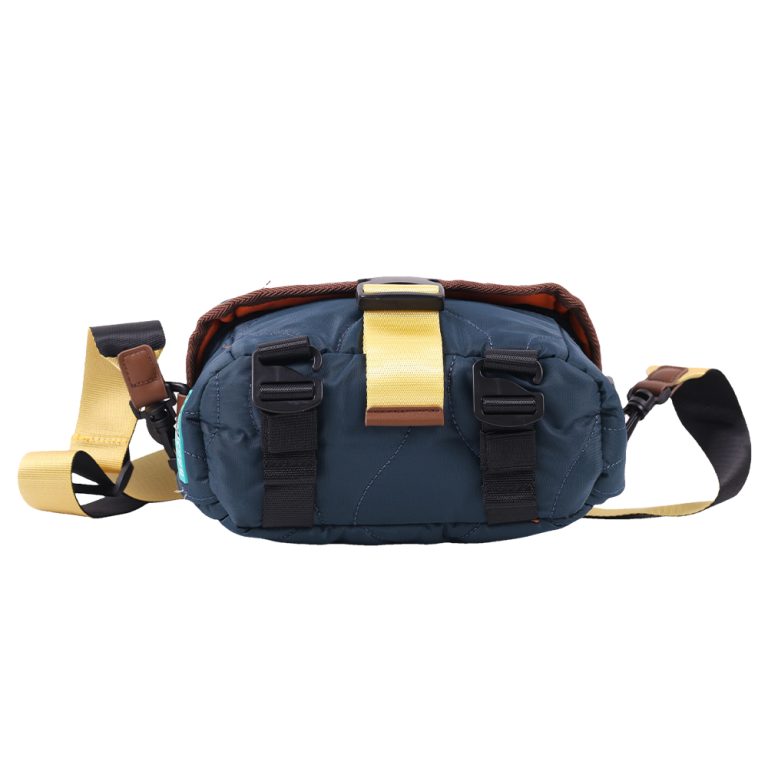
To choose between manufacturers and suppliers one must compare discrete capabilities rather than rely on reputation alone; the correct comparison isolates material sourcing, tooling competence, and quality-control protocols. Begin by requesting a prototyped camera sling bag from each contender and measure how specification fidelity, sample turnaround, and documentation differ across their processes.
Essential Comparative Criteria
Quality of materials: verify exact textile deniers, coating types (PU, TPU), foam densities and claimed abrasion ratings; request supplier certificates and fabric roll tags. Construction competence: inspect seam type, stitch density, bartack locations and hardware sourcing—YKK zippers and metal fittings versus local equivalents change longevity. Dimensional fidelity and tolerances: compare technical drawings to final sample measurements. Testing and certification: prefer suppliers that commission third-party tests (e.g., SGS) and maintain ISO 9001 or similar quality systems. Capacity and scalability: confirm annual production lines, mold/tool availability and lead times for scaling. Commercial terms: record MOQ, pricing curve by quantity, payment cadence, and warranty policy. Communication and documentation: evaluate specification packets, PP sample reports, and production photographs; ambiguity here predicts defects later.
Supplier Audit Checklist (Operational Steps)
1) Request a full tech pack and evaluate whether the supplier queries ambiguous items. 2) Order a pilot run sample with the agreed materials and trim list, then perform measurements and functional tests. 3) Audit the supplier’s QA station: observe inline inspection, AQL thresholds, and rework logs. 4) Check traceability of trims and hardware—ask for supplier invoices for critical parts. 5) Confirm shipping timelines with freight examples and contingency plans for delays. 6) Validate compliance records for restricted substances and, if needed, environmental certificates. Each checkpoint must be scored consistently so that comparisons are numerical rather than impressionistic.
Common Pitfalls and Mistakes to Avoid
Relying on photos as proof of consistency; photos hide seam integrity and inner finishing. Accepting vague material descriptions such as “water-resistant” without test metrics. Treating low MOQ alone as proof of flexibility—some suppliers use low MOQ as lead-time leverage. Ignoring tooling ownership: if the supplier owns dies and molds, you may face difficulty switching vendors. Failing to test zipper and fastening reliability under cyclical loads will surface as warranty claims after distribution. Do not skip sample aging or wear tests before committing to larger runs.
Evidence, Experience, and a Real-World Anchor
Years of factory audits and product validation inform these comparisons: field testing that measures load distribution, seam fatigue and coating delamination is repeatable when protocols are standardized. Photokina (Cologne), as a recognized industry venue for comparative product evaluation, has historically hosted demonstrations where manufacturers presented standardized endurance data for DSLR designs; such panel tests provide contextual benchmarks for a DSLR sling camera bag that one might replicate in contract negotiations. Require suppliers to supply the identical test parameters so that sample-to-sample comparisons are directly comparable and defensible.

Decision Framework and Practical Weighing
Create a decision matrix that assigns relative weight to the criteria most critical for your program—typically material fidelity (30%), construction and QA (30%), lead time and capacity (20%), and commercial terms plus compliance (20%). Score each supplier on a 1–10 scale per criterion, compute weighted totals, and then rank suppliers. Use that ranking to inform a staged engagement: small pilot order, monitored production, and conditional scale-up tied to agreed KPIs.
Synthesis and Final Consideration
Compare concrete metrics, not narratives: documented test results, transparent supply invoices, and repeatable sample fidelity reduce risk. The best partnerships demonstrate detailed tech packs, independent test reports, and predictable scaling procedures; many buyers find that selecting a single manufacturer who documents materials, testing and tooling—such as ChangRong—streamlines the progression from prototype to volume while keeping accountability clear and measurable.