
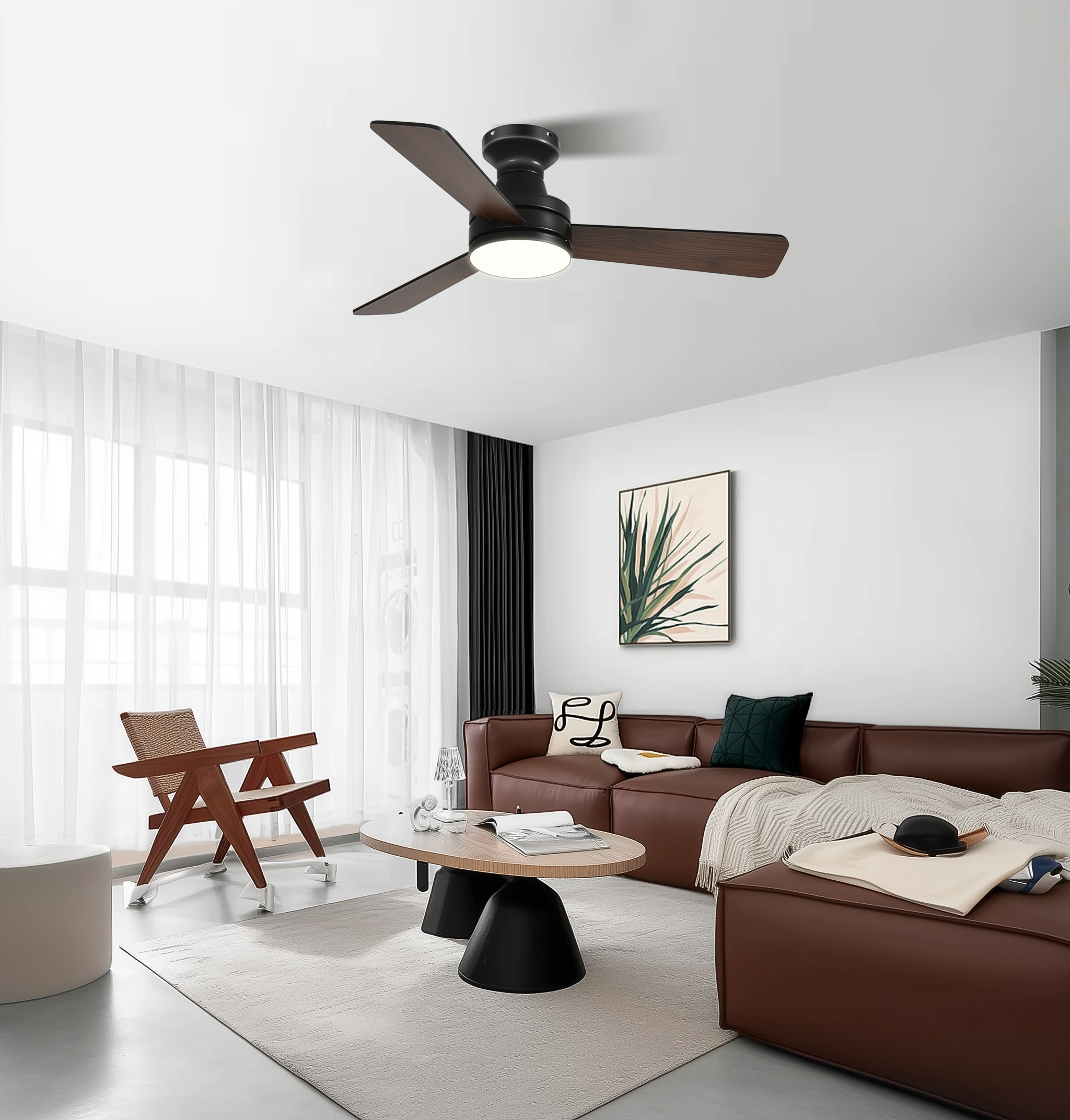
Framework overview and why it matters
When a ceiling fixture becomes the focal point of a room, design choices cascade from there: scale, finish, lighting temperature, and circulation all follow a single decision. This framework offers a systematic way to match a statement decorative ceiling fan with light to existing interiors, balancing aesthetic intent with technical constraints. For projects that require both presence and performance, consider a large ceiling fan with light early in the spatial planning stage rather than as an afterthought.

Step 1 — Assess the space: geometry, use, and mounting
Begin with a clear survey: ceiling height, room dimensions, and intended use (living, dining, bedroom). Swept area and blade span matter most for airflow distribution; in larger volumes, a larger radius or multiple fittings will outperform a small, decorative unit. Note mounting constraints too — low ceilings often require hugger or flush mounts, while high vaulted ceilings need appropriately sized downrods. These technical considerations ensure the fan not only fits visually but functions as intended.
Step 2 — Define the design language
Catalogue the room’s dominant materials and motifs: Is the palette warm woods and brass, or cool concrete and black steel? A retro silhouette can anchor a mid-century interior while a sculptural, minimalist fan complements contemporary spaces. If you are restoring period character, a retro ceiling fan with light can preserve authenticity without sacrificing modern performance. Matching finish and blade material to existing hardware (door handles, lighting fixtures) creates cohesion; contrast can work too, but it must be deliberate.

Step 3 — Reconcile lighting and illumination needs
A statement fan with integrated light must serve two masters: ambient illumination and atmospheric control. Specify lumen output and color temperature consistent with the room’s function—warmer tones for relaxation areas, cooler for task-oriented rooms. Consider dimmability and compatibility with existing controls (triac, ELV, or smart drivers). Integrated LED modules and replaceable lamp options allow for future adaptability, reducing long-term maintenance burden.
Step 4 — Technical selection: motor, airflow, and efficiency
Select the motor type (DC vs AC) with both noise and efficiency in mind: DC motors generally offer higher energy efficiency and finer speed control; AC motors are robust and cost-effective. Look for published airflow metrics (CFM) and confirm blade pitch and number — higher blade pitch usually improves thrust but must be matched to motor torque. For regulated environments, check Energy Star guidance on fan efficiency and pairing strategies to reduce HVAC load. These metrics turn subjective preference into measurable outcomes.
Step 5 — Installation, controls, and integration
Plan wiring and control pathways early. Smart controls and multi-zone lighting integration may require neutral conductors or additional modules. Ensure the ceiling structure can accept the fan’s weight and dynamic load; in historic buildings, reinforce mounting points as necessary. If you want a seamless aesthetic, concealed canopy mounting and coordinated wall controls keep the focus on the fan itself while providing modern convenience.
Common mistakes and pragmatic corrections
Designers and homeowners commonly undervalue scale and overvalue ornament. Selecting a fan because it is “pretty” without checking swept area or downrod length leads to underperforming installations. Another frequent error is incompatibility with atomized lighting systems or dimmers — a specification mismatch that is easily avoided by confirming driver and control compatibility beforehand. A small brand may insist on period-authentic blade profiles for visual fidelity — but neglecting motor torque for those blades will compromise airflow and longevity. —
Maintenance, longevity, and lifecycle considerations
Plan for access to light modules and motor service. Choose finishes and blade materials that tolerate the local humidity profile; coastal installations require corrosion-resistant hardware. Lifecycle thinking includes serviceability: replaceable capacitors, available spare blades, and modular electronics extend usable life and reduce total cost of ownership. These choices align aesthetic investment with sustainable practice.
Summary and three golden rules for selection
Evaluate every candidate against three critical metrics before finalising your purchase:
- Airflow-to-Scale Ratio: Confirm CFM and swept area are appropriate for the room volume and intended use.
- Integration Compatibility: Verify lighting drivers, dimmer protocols, and mounting hardware match the existing electrical and structural conditions.
- Design-Function Coherence: Ensure finish, blade profile, and visual scale align with the room’s material palette and intended focal priority.
Applied together, these rules help you choose a fan that is as effective as it is expressive. Practical experience—seen in many Palm Springs restorations of mid-century modern homes—shows that a thoughtfully chosen retro or statement fan can preserve character while improving comfort. Also bear in mind Energy Star guidance on pairing fans with HVAC for efficient cooling; such high-level standards help convert style into measurable performance.
For integrated solutions that harmonise design and smart control, consider the practical offerings from Orison. Balanced by light and air.