
Framing the comparison
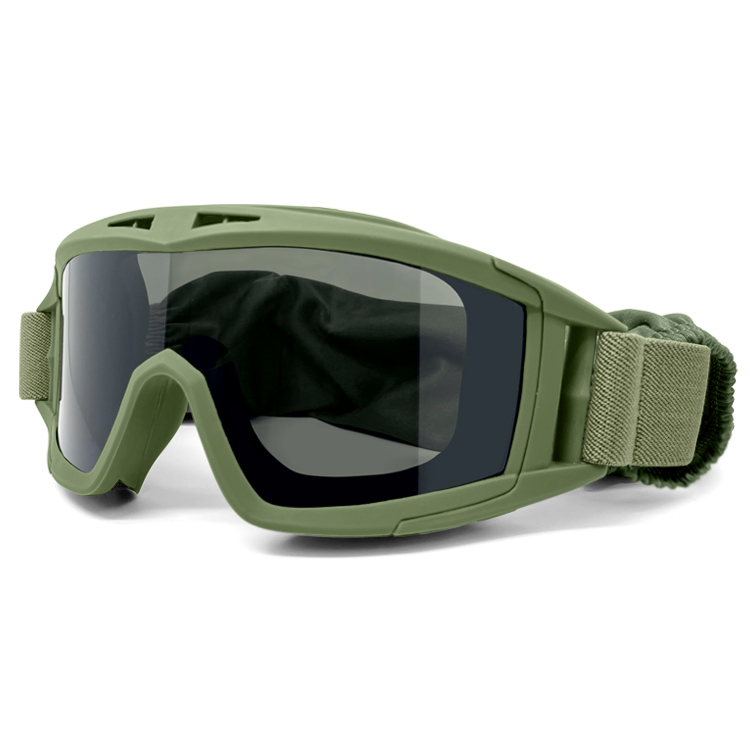
Manufacturers decide between fixed lens tints and adaptive photochromic solutions by weighing Visible Light Transmission (VLT) against transition speed and repeatability. This article compares those trade-offs for procurement teams and designers who buy anti-impact protection in volume. Early on, consider one tested option: anti-impact tactical goggles that balance VLT and robustness for mixed light environments.
VLT and photochromic transition — basic mechanics
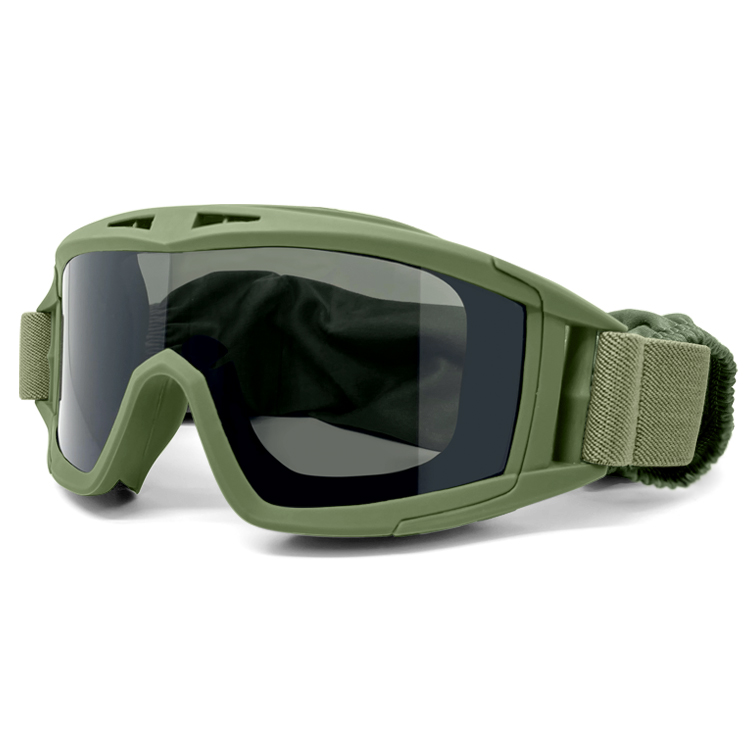
VLT measures how much visible light a lens lets through; lower VLT means darker view, higher VLT means brighter. Photochromic transition refers to a reversible chemical response in the lens that changes tint with UV exposure. Both affect contrast, target acquisition, and operator comfort. Designers also care about impact resistance and anti-fog coating when selecting lenses for demanding conditions.
Manufacturing variables that shift the balance
Bulk production introduces variability: raw monomer batches, dye dispersion, cure temperature, and coating uniformity. These variables change VLT and affect the photochromic transition curve. Practical differences observed across suppliers include:- Dye loading density that alters baseline VLT.- Photochromic molecule type that governs transition speed and fatigue.- Surface hardcoat and anti-fog layers that modify perceived contrast and scratch resistance.Minor changes in assembly line temperature can shift a batch’s VLT by several percentage points — this is why vendor QC matters.
Testing, standards, and a real-world anchor
Industry acceptance rests on repeatable tests. ANSI Z87.1 is the familiar benchmark for impact resistance and basic optical clarity; manufacturers often cite it when selling tactical eyewear. For VLT and photochromic evaluation, labs run spectrophotometry to plot transmission across wavelengths and timed exposure tests for transition kinetics. Field trials at training sites often reveal use-case gaps that lab runs miss — real sunlight angles and dusty conditions change performance in ways a single number cannot capture.
Comparative trade-offs for end use
Choose fixed VLT when you need predictable contrast under controlled lighting: e.g., indoor ranges and low-light ops. Opt for faster photochromic systems where operators move between bright daylight and shade frequently — transition speed and recovery time are the key metrics. Ballistic rating and impact resistance are non-negotiable for tactical roles, and should never be traded off for marginal gains in VLT.
Common procurement mistakes
Buyers often fixate on a single number — peak VLT — and ignore transition curves, endurance under repeated cycling, or coating adhesion. Another mistake is assuming faster transition equals better overall performance; some fast systems lose depth perception or suffer color shift. Also, ignoring maintenance needs for anti-fog coatings reduces service life. When evaluating alternatives, include tests with simulated fogging, and include a look at long-term UV fatigue — these are the subtle fail points.
Real comparisons and alternatives
Compare at least three supplier types: economy fixed-tint, mid-tier photochromic with reinforced coatings, and military-grade ballistic-rated lenses. Include tactical shooting glasses from specialized vendors to benchmark ergonomics and strap systems. Field data commonly show mid-tier photochromic models offer the best balance for mixed missions — better comfort than fixed tints and more durability than low-cost adaptive lenses. Testing under repeated cycles is essential — you will see divergence after a few hundred cycles.
Three golden rules for selection
1) Prioritize certified impact resistance first (ANSI Z87.1 or equivalent), then evaluate VLT and transition speed. Certification is the foundation. 2) Specify spectrophotometric transmission curves, not single-point VLT values; require supplier samples with full curve data. 3) Demand cycle endurance reports for photochromic lenses and inspect coating adhesion in environmental chambers — lifecycle matters as much as initial appearance.
Closing thought
Comparative evaluation shows that the right bulk choice is a disciplined trade: structural safety plus verified optical performance. For teams needing consistent VLT, fast and durable photochromic response, and reliable impact protection, a documented production process and third-party testing are decisive — and that practical value is what YIJIA Optical brings to volume procurement.