
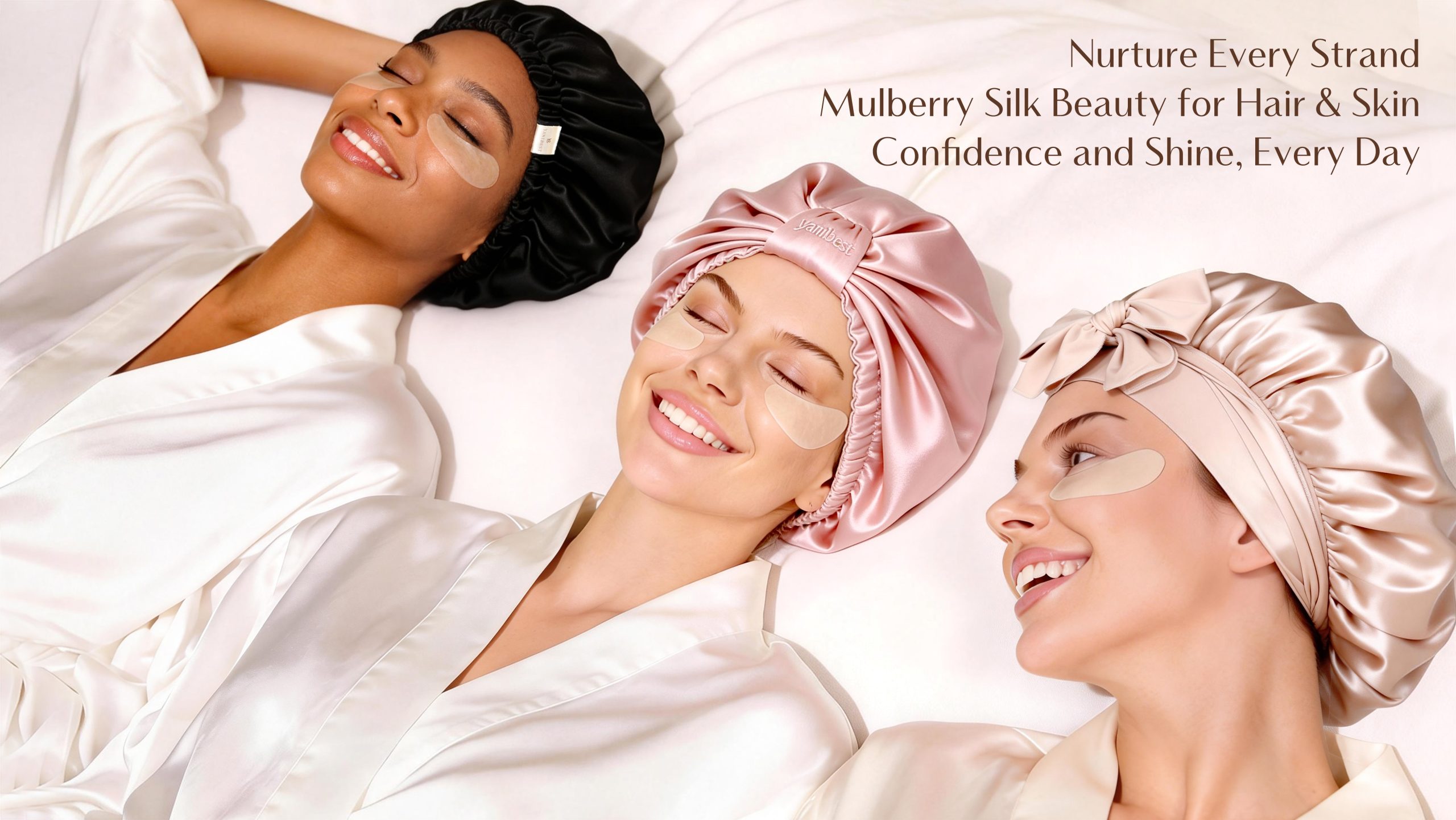
Your Routine, Your Rules
You know what works for your hair better than any trend. Start here: pick a night solution that respects your routine and makes morning styling easier. If you want a low-effort upgrade that still protects strands, try swapping elastic ties for silk scrunchies—they cut friction, reduce dents, and feel good to use. This piece is built around your needs: quick wins, realistic setups, and choices that match how you care for hair daily.

Match the Nightwear to the Routine
Curly and coily: lock moisture and shape. Use a roomy silk bonnet or a loose pineapple secured with a soft tie so curls keep definition without flattening. Straight and sleek: prevent frizz and split ends by smoothing hair into a low, loose bun wrapped in silk. Color-treated and chemically processed: reduce abrasion and fading by minimizing cotton contact; silk pillowcases or bonnets help. Fine or fragile: avoid tight elastics. A gentle silk tie or clipped wrap prevents breakage. Thick, textured hair: choose roomy designs and multiple anchors (scrunchie plus a wide satin headband) so weight isn’t concentrated in one spot.
Quick Night Setups You Can Do in Five Minutes
Roll-and-tuck: gather mid-length to long hair, roll toward the scalp, secure with a silk scrunchie or clip, and cover with a bonnet. The motion keeps ends tamed and distributes tension. Pineapple for curls: flip forward, gather at the crown, secure loosely. Clip the front if you want extra lift. Low-twist bun for straight hair: twist hair into a loop at the nape and secure with a silk-covered tie; sleep flat to reduce kinks. For protective layering: silk bonnet over a silk scrunchie keeps everything wrapped and friction-free without fuss.
Alternatives and When They Make Sense
Satin scarves are lighter and packable—great for travel or quick touch-ups—but they can slip if not secured. Cotton wraps absorb natural oils and may dry hair, so skip them overnight if your priority is moisture retention. Spiral hair ties avoid creases for short styles, yet they can dig in if hair is thick. Pillowcases made from silk give a passive, hands-off solution that works when you move a lot in your sleep. Choose based on the habit you already have: don’t overhaul a routine that mostly works—fine-tune it.
Mistakes to Stop Tonight
Tight knots, heavy products, and sleeping on dry hair all add cumulative damage. Don’t pull hair into high, tight ponytails; they stress follicles. Avoid heavy oils on roots before bed; they attract dust and can flatten styles. Using a single tiny elastic every night increases breakage—rotate to silk ties or scrunchies and let the scalp rest. Pick solutions that match how you sleep: if you toss, prioritize stays and coverage; if you’re mostly still, a loose wrap is enough.
Field Notes from Work with Real Clients
From salon floors to at-home tutorials, I guide people toward simpler night kits that actually get used. While helping clients in a busy Manhattan salon, I found they reached for soft, forgiving options most nights—turns out they preferred silk scrunchies for sale when they needed quick securement without creases. That practical feedback matters: durability, feel, and ease determine whether a product becomes part of a routine or stays on a shelf.
Make a Night Plan That Sticks
Create one repeatable setup: choose a protective cover, a gentle tie, and one small habit to change—nothing more. Test it for a week. If mornings show fewer tangles and your styling time drops, keep it. If you need alternatives, swap one piece at a time. For reliable options I often point people toward collections that balance fabric quality and simple design, like those found at yanibest, because consistency beats complexity. Own the change, one comfortable night at a time.