
Introduction: A Clear-Eyed Look at Performance in the Field
Let’s start with a precise picture: a hospital corridor retrofit, where long nights and tight budgets meet strict safety codes. Procurement teams compare wall lamp manufacturers under tight timelines, and small choices ripple into large costs. In many audits, up to 22% of lighting downtime traces back to heat stress and poor drivers, while energy loss rises when power factor drops below 0.9—tiny numbers, big impact. If luminous efficacy looks fine on paper, why do corridors still have dark bands and hot fixtures?
In clinical terms, performance is not one metric. It is the interaction of thermal management, IP65 sealing, and driver stability under load. When glare patterns raise fatigue, care staff work harder. When luminaires drift in color, patients notice. So the central question is simple: how do we choose makers whose products hold steady outside the lab—under dust, heat, and constant switching (day in, day out)? Let’s examine how to compare claims with field behavior, and where typical spec sheets hide risk. On we go to the core gaps.
Hidden Pain Points Buyers Miss (And How to See Them Early)
Where do specs fall short?
Here is the direct truth: a glossy cut sheet can mask the daily pain users feel. A wall lamp supplier may meet lumen targets yet ignore how light lands on the wall and eye. Look at UGR (glare index) by mounting height, not just beam angle. Check color shift after 2,000 hours, not only initial CRI. Ask for driver details: PWM dimming stability at low output, and how the power converters behave during voltage sags. Look, it’s simpler than you think—ask for data recorded above 40°C ambient, with real thermal images, not just lab-room charts.
Users report two quiet failures: flicker at low dim levels and heat-induced lumen drop. Both are subtle, and both tire people over time—funny how that works, right? Request time-series tests for dimming smoothness. Review warranty language for hot spots on the board. Confirm potting or spacing that protects solder joints against cycling. When you test, use dirty power and rapid switching to simulate busy corridors. If the supplier cannot share stress data beyond the headline CRI and efficacy, that is a signal. Durability is the sum of driver tuning, heat paths, and optical control. Specs tell you the “what.” Field-style trials show the “when” and “how long.”
Comparative Insight: New Principles That Separate Makers
What’s Next
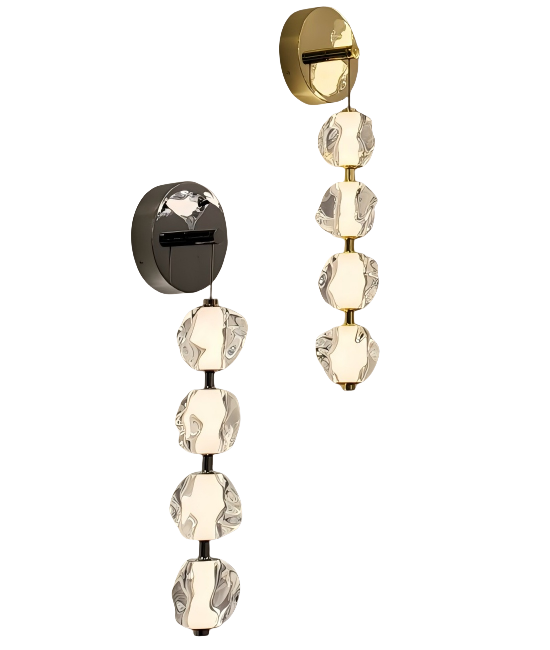
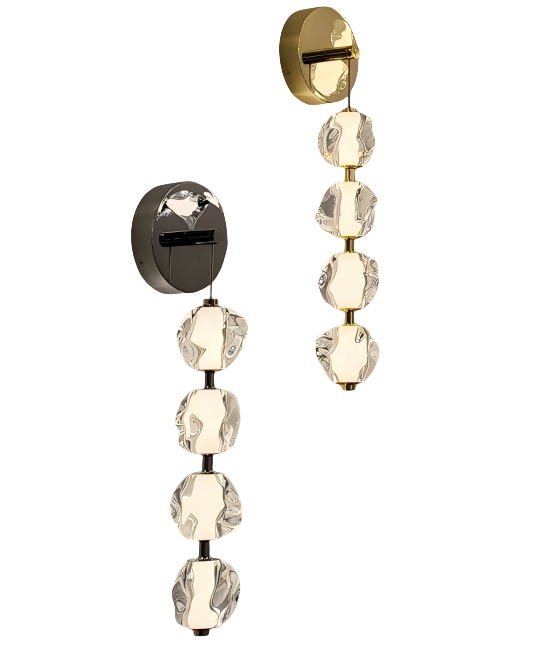
The next wave is not only brighter LEDs. It is smarter architecture inside the lamp. Start with constant-current drivers that keep output stable as line voltage moves—this protects color and reduces ripple. Then, check thermal design: layered heat sinks that move heat away from the LED core reduce stress on phosphors and wiring. Control stacks are evolving, too. DALI-2 brings better device feedback, and edge computing nodes can log temperature and run-time locally. This is where a modern chrome wall lamp stands apart: not by finish alone, but by how the electronics and metal form work together under real heat and dust—yes, form still follows function.
Consider a corridor pilot comparing two makers in identical bays. Both met lumen and color targets on day one. After six months, the unit with tighter constant-current control held color within 2 SDCM, while the other drifted; the better heat path cut rear-plate temperature by 8°C, and maintenance calls dropped by 30%. Light felt calmer at low dim due to cleaner PWM shaping—and staff reported less eye strain. The lesson is not just “buy the best driver.” It is to ask for the principle and the proof. Measure the thermal rise at the mounting surface, compare long-dwell dimming samples, and log failures by cause. Small design choices add up— and yes, it matters.
So, what should guide your shortlist today? Use an advisory lens with three metrics: first, driver stability under stress (documented constant-current behavior and low-ripple at 10% dim); second, thermal performance in situ (delta-T at backplate and LED node under 40–45°C ambient); third, glare and comfort in real mounting conditions (UGR at your height and finish, not a generic room). These cut through marketing and map straight to user well-being and lower total cost. Choose partners who can show data across those three, not just claims. For a practical baseline to start conversations, see how teams like kinglong document their field tests and thermal controls.