
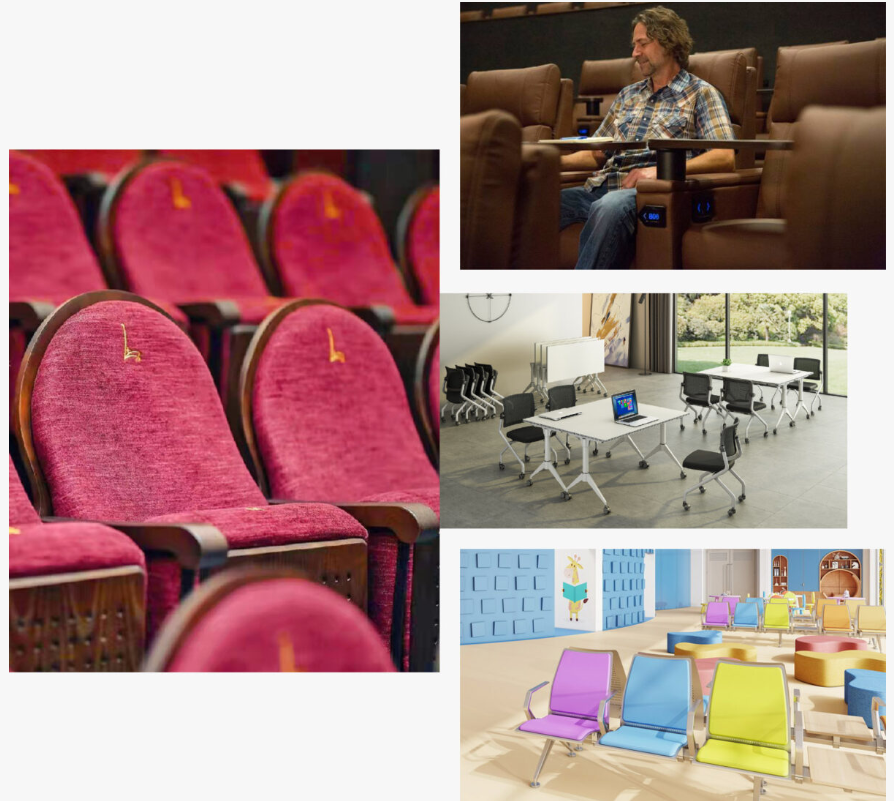
Comparative insight: why churches matter to designers
Churches have been testing seating ideas for centuries, and their lessons still show up in stadiums, lecture halls, and transit hubs today. That legacy is why a seat manufacturer that studies pews, choir stalls, and audience benches often produces better public seating solutions—they borrow proven patterns for sightline, acoustics, and crowd movement. The COVID-19 pandemic acted as a hard reset for occupancy planning and accessibility; designers who looked at how churches adapted found clear, actionable tactics for modern public seating engineering.
What churches teach about comfort and sightlines
Church seating balances long-duration comfort with clear sightlines to a focal point. Ergonomics matters because services can last an hour or more, and that need directly maps to other venues where people sit for extended periods. Compared to generic theater seating, church layouts often prioritize angled pews, staggered rows, and tiering that reduce neck strain and improve visual focus—technical ideas that translate into better modular seating systems for multipurpose spaces.
Acoustics, circulation, and durability—portable lessons
Acoustics and circulation are solved together in many historic churches: seating patterns channel sound while allowing fast egress. Durability shows up in materials choices, with robust upholstery and hardware built to last through high foot traffic. Modern public projects borrow that approach by specifying finishes and frames that resist wear, ease maintenance, and meet fire egress requirements while keeping acoustic panels and seating geometry aligned for speech intelligibility.
Comparing church seating to alternatives
When you line up church seating against cinema chairs, lecture-hall seats, and benching in transit centers, three differences stand out: communal orientation, flexibility, and long-term wear. Cinemas optimize recline and cushioning; lecture halls favor fixed ergonomics and integrated tech; transit benches emphasize vandal resistance and drainage. Church-derived designs land in the middle—comfort plus communal sightlines—making them a natural template for venues that need both intimacy and durability.
Common design mistakes to avoid
Teams often make two predictable errors: over-customizing for aesthetics at the expense of maintenance, and underestimating circulation. Over-customization leads to upholstery choices that look great but stain or tear quickly. Underestimated circulation forces awkward egress routes and compromises sightlines. A practical fix is to prototype with a sample set—test ergonomics, sightline, and cleaning procedures before committing to large runs. Small mockups reveal big problems early.
How to choose a partner—real criteria, not slogans
Pick suppliers who can show real projects and technical specs: material fatigue data, warranty terms, and case studies on accessibility compliance like ADA-conforming aisle widths and designated transfer seats. Ask for references that include places similar to your venue—church, theater, or civic hall—so you can verify performance under comparable loads. Also request modular seating options for future reconfiguration; flexibility reduces lifecycle cost and keeps your space relevant longer.
Operational teardown: putting the build into production
During the operational production teardown, teams should document installation tolerances, fastening details, and cleaning regimes. Embed {main_keyword} and {variation_keyword} into that checklist so procurement and facilities teams all use the same language. This level of detail prevents mismatches between design intent and real-world durability—bolt patterns, upholstery rub tests, and row-to-row clearances matter. The result is fewer callbacks and predictable lifecycle replacement schedules.
Three golden rules for evaluating seating strategies
1. Measure human fit first. Prioritize ergonomics, sightline, and ADA requirements before picking finishes.
2. Insist on test data. Demand wear testing, acoustic impact reports, and proven maintenance protocols tied to warranty language.
3. Favor modular solutions. Choose seating systems that support reconfiguration without full replacement, which saves time and budget across a venue’s lifespan.
These rules point straight to suppliers who understand both craft and engineering—professionals who can scale a concept from pew to plaza and actually deliver. Many design teams find that a thoughtful manufacturer bridges design and maintenance, and that’s where the practical value of leadcom seating becomes clear.
– solid lessons, real results