
Introduction — A Moment Where Machines Meet Reality
Ever watched a conveyor stop mid-run and wondered why the simplest thing can cause the biggest headache? I have, and that quick, ugly pause taught me more than any manual ever did. In that workshop scenario we had a failing motor controller and two hours of idle labor; the data showed 28% more downtime on that line that month (yes, I counted). So what really breaks first — the wiring, the software, or our assumptions?

I talk about motor controller setups a lot because they sit at the junction of mechanics, electronics, and plain human impatience. We toss around terms like power converters and edge computing nodes during meetings, but in practice the faults are rarely glamorous. Who hasn’t blamed software when the truth was a loose terminal? I’ll walk you through what I’ve seen work and what usually doesn’t — and I’ll keep it practical, not preachy. Let’s set up the problems so we can sort the solutions.
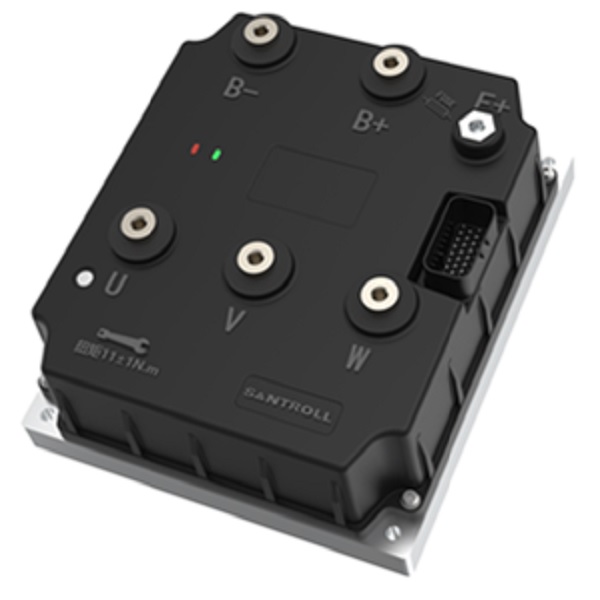
Now, let’s move into what lies beneath the surface — the faults that hide in plain sight and the user pains that get overlooked. Ready? (I am.)
Deeper Layer: Why Traditional Solutions Often Fall Short
I’ll be blunt: many fixes are band-aids. When I first started tracing faults on an ac motor controller, the obvious steps—replace the fuse, swap the capacitor—sometimes helped, but more often they just delayed the next failure. Traditional approaches assume steady conditions. They expect clean power, perfect cooling, and ideal load profiles. In real plants we get voltage sags, harmonic distortion, and intermittent torque spikes. Those factors stress the inverter and the control firmware in ways quick fixes don’t address.
So what keeps failing?
From my experience it’s three core flaws: poor thermal management, insufficient feedback (no field-oriented control or weak sensor strategies), and a tendency to ignore waveform quality (PWM noise and harmonics). I’ve seen controllers fail because the cooling fan choked on dust — ridiculous, but true. Likewise, open-loop drives without proper torque control struggle under variable loads. Look, it’s simpler than you think: if you don’t measure what matters, you can’t control it. That’s why I favor solutions that combine robust hardware (better power converters, hardened inverters) with smarter control loops and clearer telemetry.
Forward-Looking: Principles for Better Motor Control
What’s next is not about replacing everything. It’s about smarter layers. I believe the most useful step is embracing modern control algorithms while keeping pragmatic hardware choices. A good example is sensorless field estimation coupled with adaptive PWM schemes — they give you smoother startup and better efficiency without a full sensor retrofit. When I review a plan now, I look for sensorless control options, regenerative braking capability, and improved thermal margins. These are practical, not flashy, and they matter for uptime.
What’s Next — Practical Tech Principles?
Also, consider the role of the variable speed controller for ac motor as more than a speed dial. Treat it like a data source: collect torque trends, temperature logs, and harmonic signatures. Use that data to refine protection thresholds and schedule maintenance before a failure — funny how that works, right? In short: combine solid hardware, smarter control (sensorless methods, regenerative features), and basic analytics to cut repeat failures.
To help you evaluate options, here are three quick metrics I use: 1) Thermal headroom — how much extra cooling margin exists; 2) Control fidelity — does the controller support field-oriented control or equivalent?; 3) Diagnostics depth — can it log current, torque, and harmonic data? Score each area and you’ll make clearer trade-offs. I’ve put these ideas into practice many times, and they measurably reduce downtime and maintenance surprises.
For hands-on components and proven inverters I often look to suppliers who balance durability and control features — like Santroll. They’re not magic, but they give you the tools to make smarter choices.