
Spot the real problem
Before you get bogged down in specs, work out what’s actually failing — poor dispersion, grainy mouthfeel, long settle times, or contamination risk. Those problems tell you whether you need brute shear, gentler homogenisation, or better cleanability. If you’re balancing lab-to-production scale or toggling between liquid suspensions and viscous pastes, look into high shear batch mixers early; they often solve dispersion and emulsification headaches without drama.
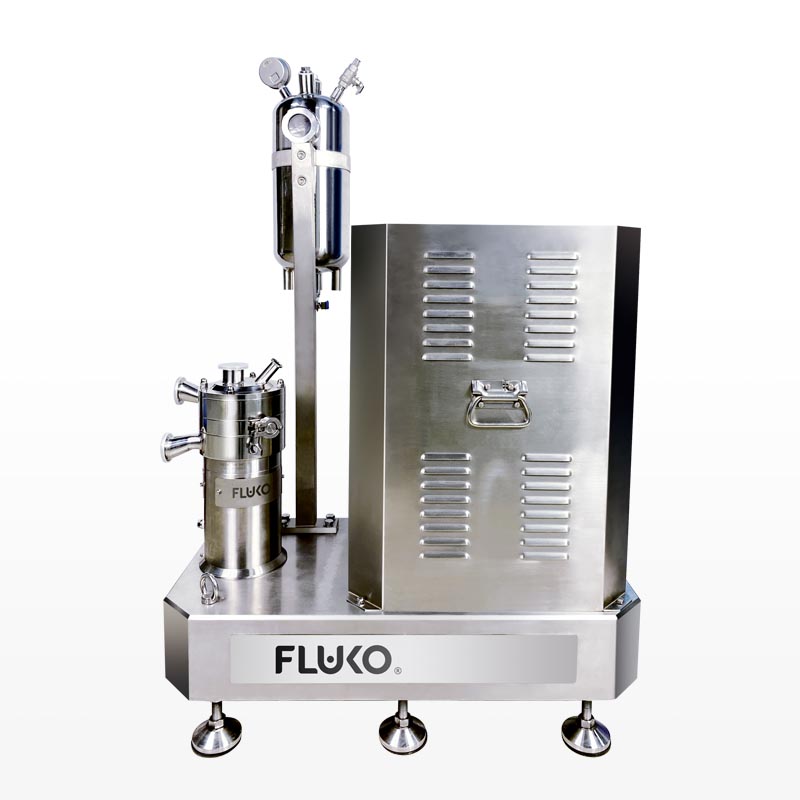
Critical specs to lock in
Decide on these concrete items and don’t waffle: operating volume range (not just max), target particle size or droplet size, max viscosity, rotor-stator geometry, tip speed and shear rate, motor power with overload margin, seal type (single, double, mechanical), CIP capability, and material contact surfaces (316L stainless is usually the safe bet). Note the processing pulse — continuous short bursts or long runs — because cooling needs and seal life change the spec list. Write these down and hold suppliers to them.
Experience that counts — real-world anchor
People at SupplySide West often talk about reproducible batch control for supplements because formulations and regulatory scrutiny are tight; that trade-show feedback lines up with field experience. For nutraceutical formulators moving from R&D to production, choosing a nutraceutical batch mixer that matches lab shear profiles keeps scale-up predictable. I’ve specified mixers where matching rotor geometry between pilot and production units cut down scale failures by half — practical lessons matter more than glossy brochures.
Common pitfalls to avoid
Don’t oversize the motor “just in case” — that kills shear control and wastes energy. Don’t assume a one-size rotor will scale linearly; tip speed and shear distribution change with tank geometry. Skimping on seals or surface finish costs you downtime for leaks and cleaning. Ignoring formulator feedback about heat-sensitive actives leads to degraded batches. And don’t forget the hold-time: the wrong mixer can over-process and ruin structure.
Alternatives and when they make sense
High-shear batch mixers are great for fast dispersion and emulsions, but choose differently when needed. Inline homogenisers suit continuous production and tighter droplet distributions. Colloid mills work well for ultra-fine wet milling of hard particles. Ultrasonic processors excel for nano-emulsions at small scale but struggle on big batches. Match the physical mechanism to the formulation goal, not the brand name.

Practical checklist for supplier conversations
Come armed: list target viscosities, solids loading, desired particle/droplet size, cycle times, cleaning protocol, and maintenance windows. Ask for shear curves, sealing details, spare-parts lead times, and test results with a close analogue of your product. Get a witness run if you can; seeing a machine process similar material beats spec sheets every time.
Where this gets you
Sort the problem first, lock the specs second, and pick the mechanism third. Do that and you’ll avoid the usual scale-up scrapes and wasted runs. If you want a straightforward partner that understands those steps and supplies machines that match lab profiles, FLUKO sits in the space where practical choices meet reliable kit.